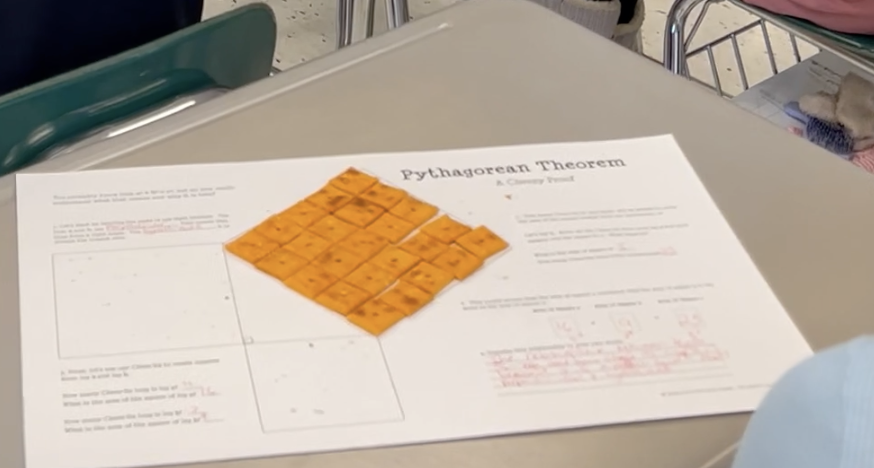
This week I implemented a new lesson. It was a Cheez-It activity with reading “What’s Your Angle, Pythagoreas?”
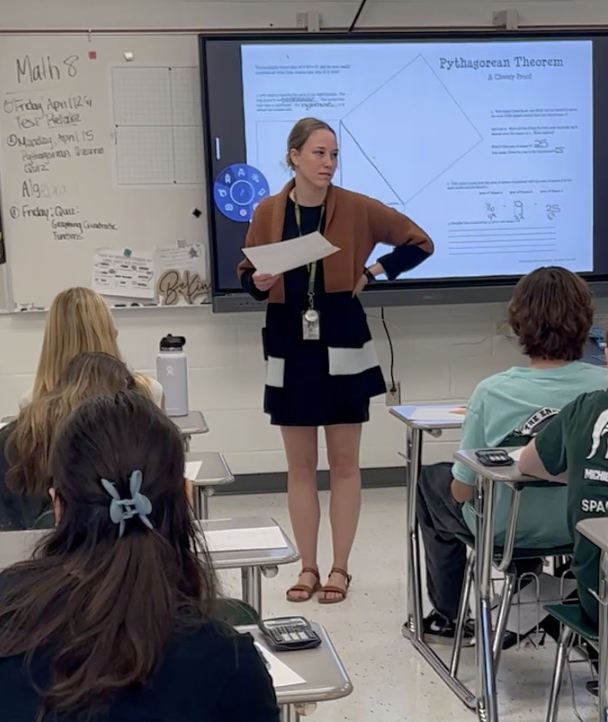
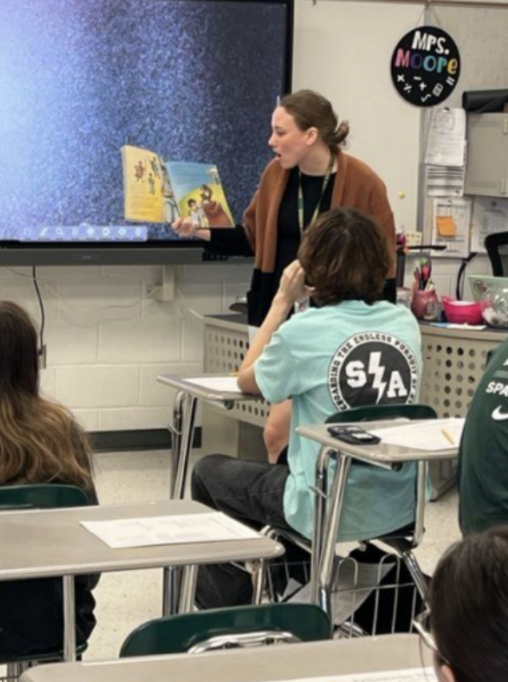
I love literacy. I love reading and writing, and I love incorporating both into other subjects. I asked students to identify connections to the Cheez-It activity but also to the real world before I started reading. These connections are the basis for learning. Every student was engaged.
Here is the link to the Cheez-It mats we used!
If you’re looking to add read aloud to your math classroom, here are some of my favorites that I have on my bookcase.
When teaching elementary, I’ve used the following books to add literacy to math. The truth is, there are a ton of amazing books out there related to math, and students K-12 can engage in read aloud. It’s not just for elementary.
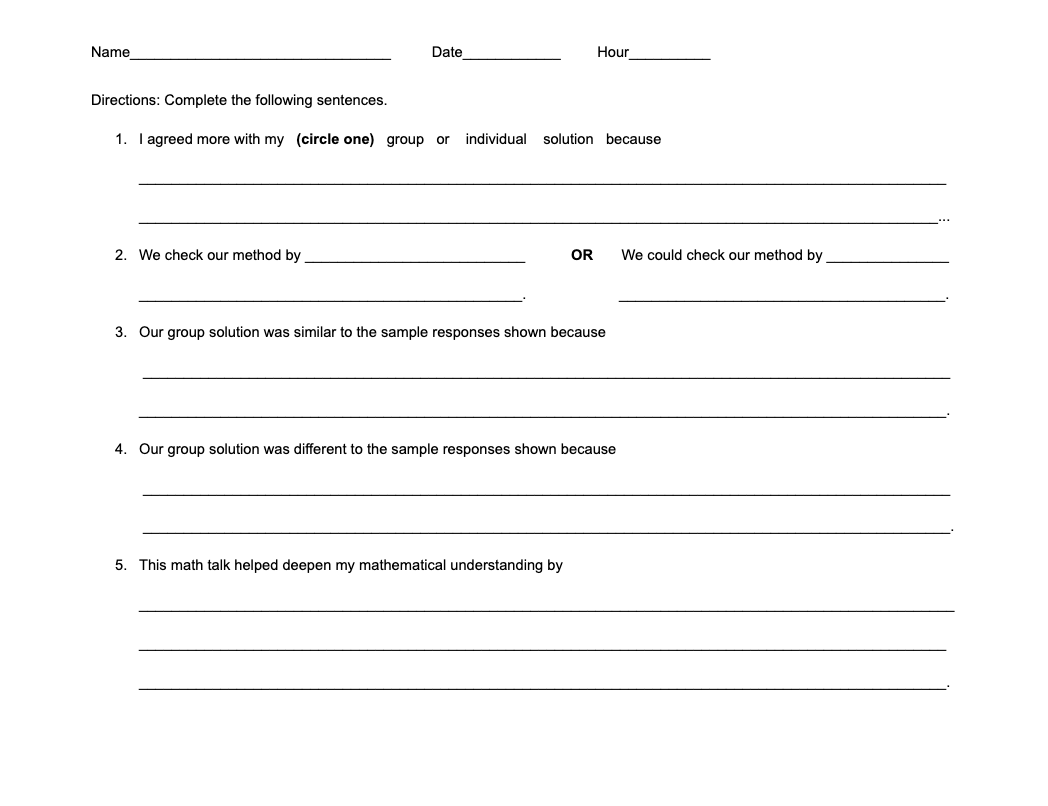
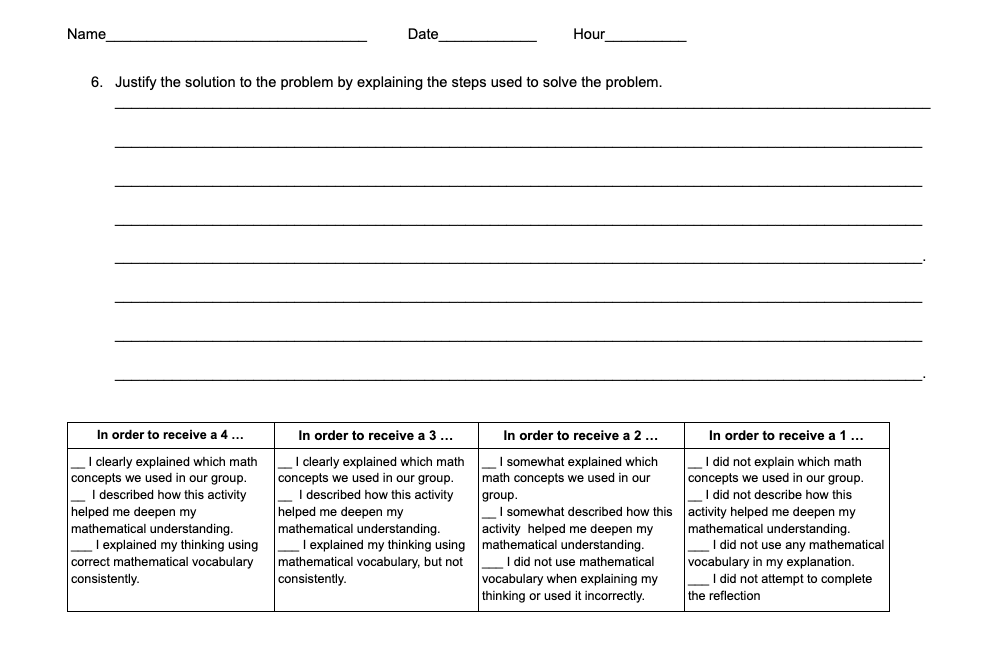
For writing, students often work in groups to solve problems. Students have to write sentences comparing their answers to the other groups. They write a paragraph to justify their solution. Students have to incorporate vocabulary into their writing too and use a rubric to guide their writing and explanations.
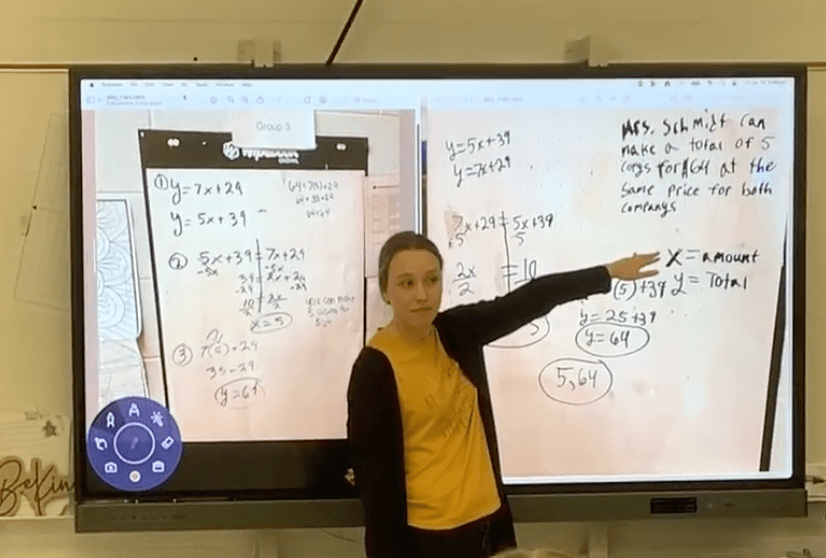
Before and during student writing, we discuss student board examples to compare ours and other groups’ work. Here I am explaining that x isn’t just amount but the amount of copies.
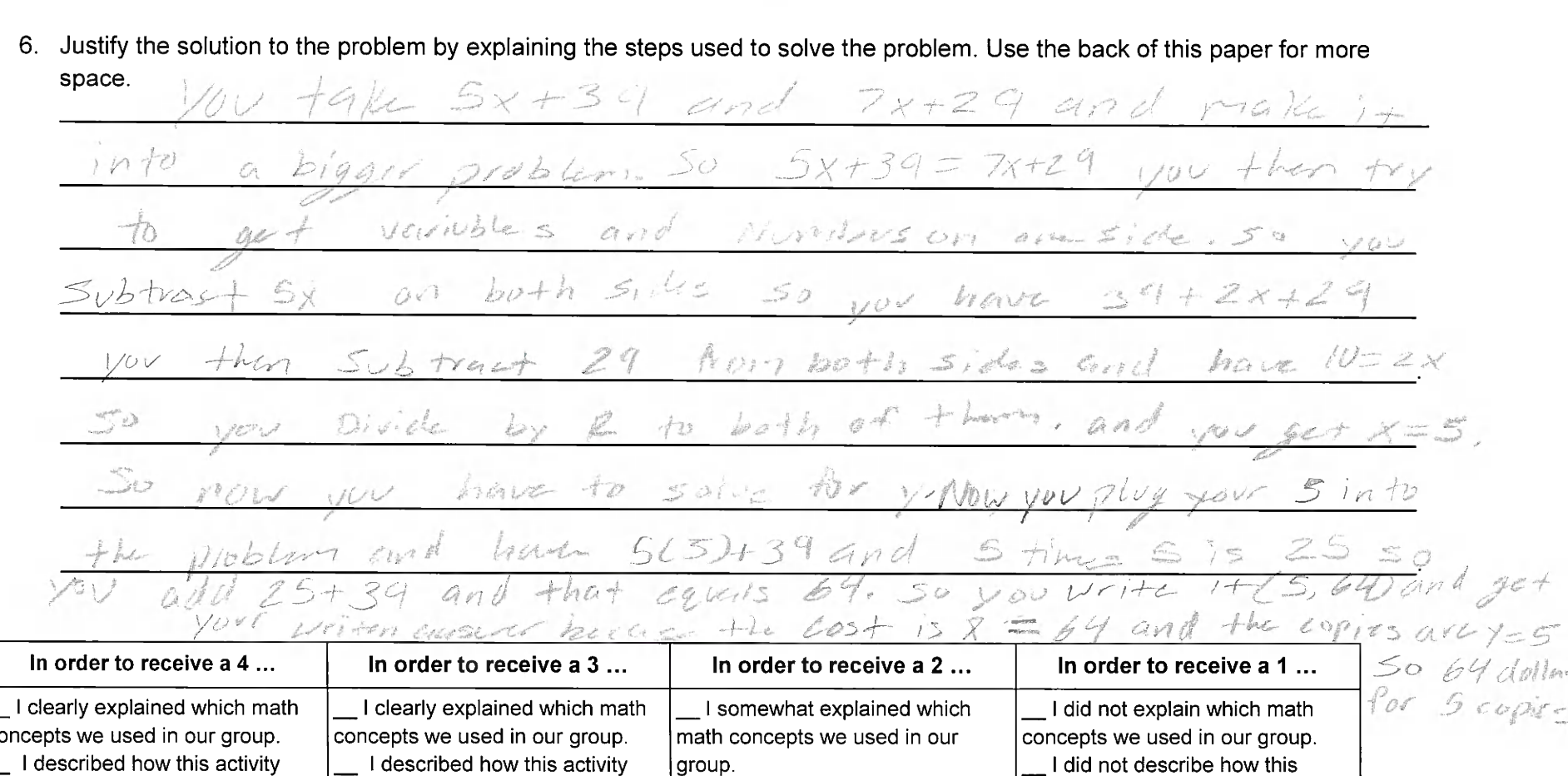
Here are some student examples of writing in math for their reflections.
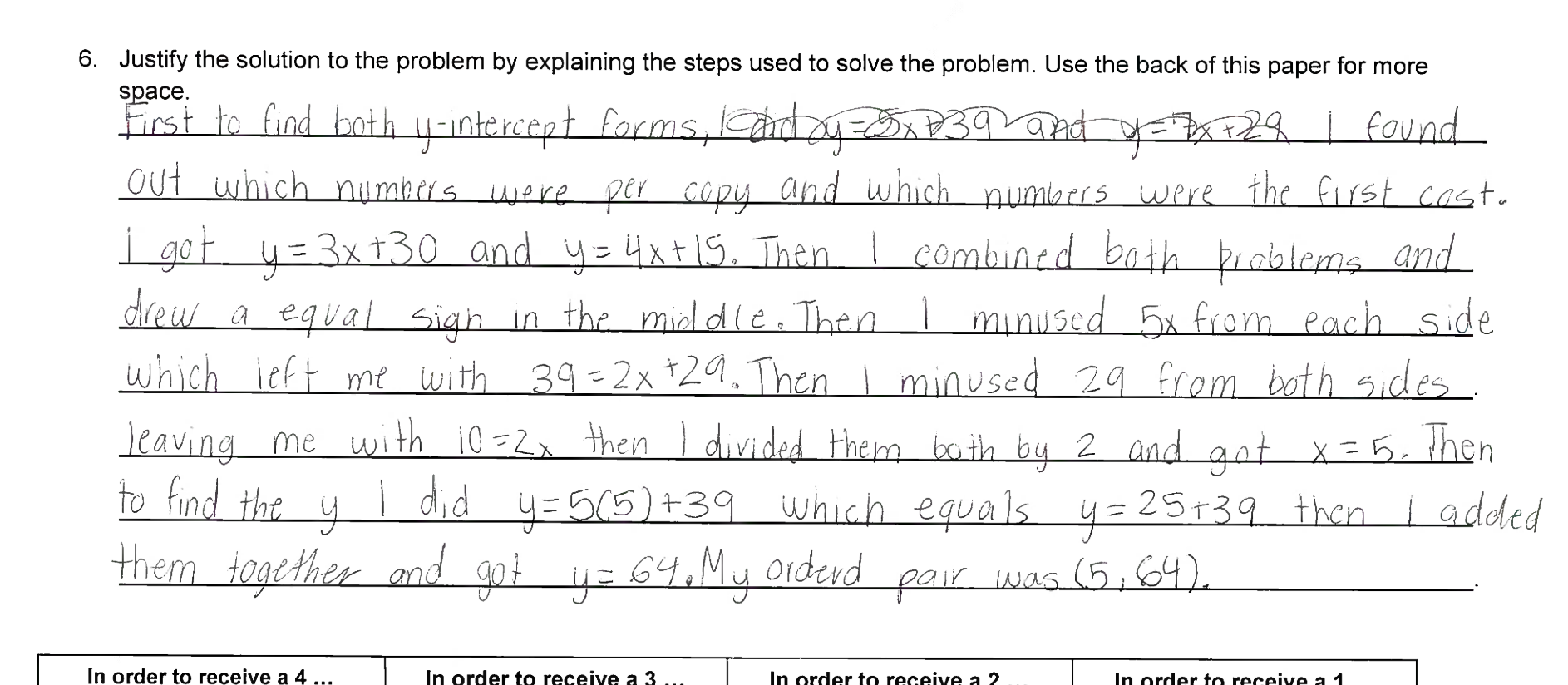
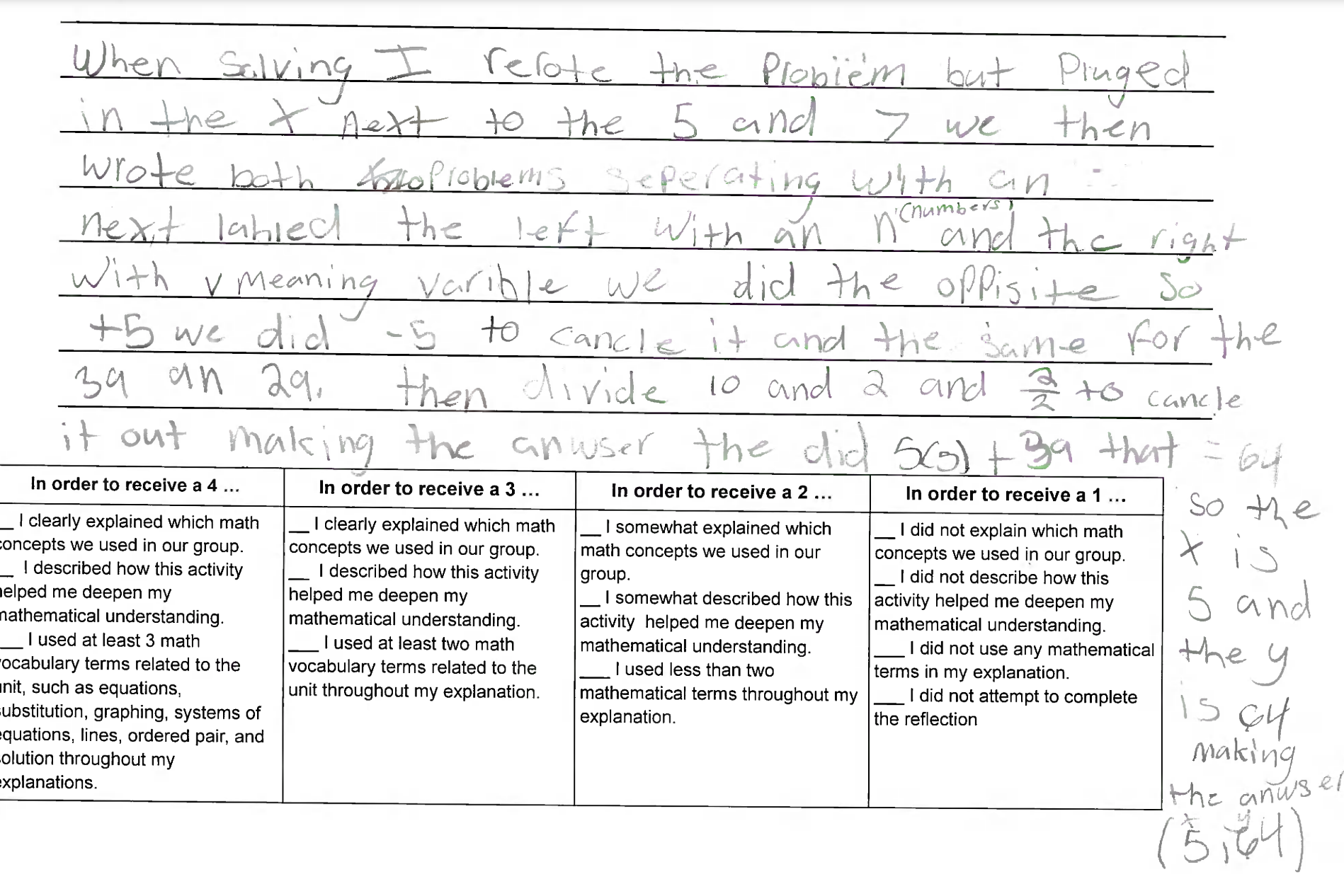
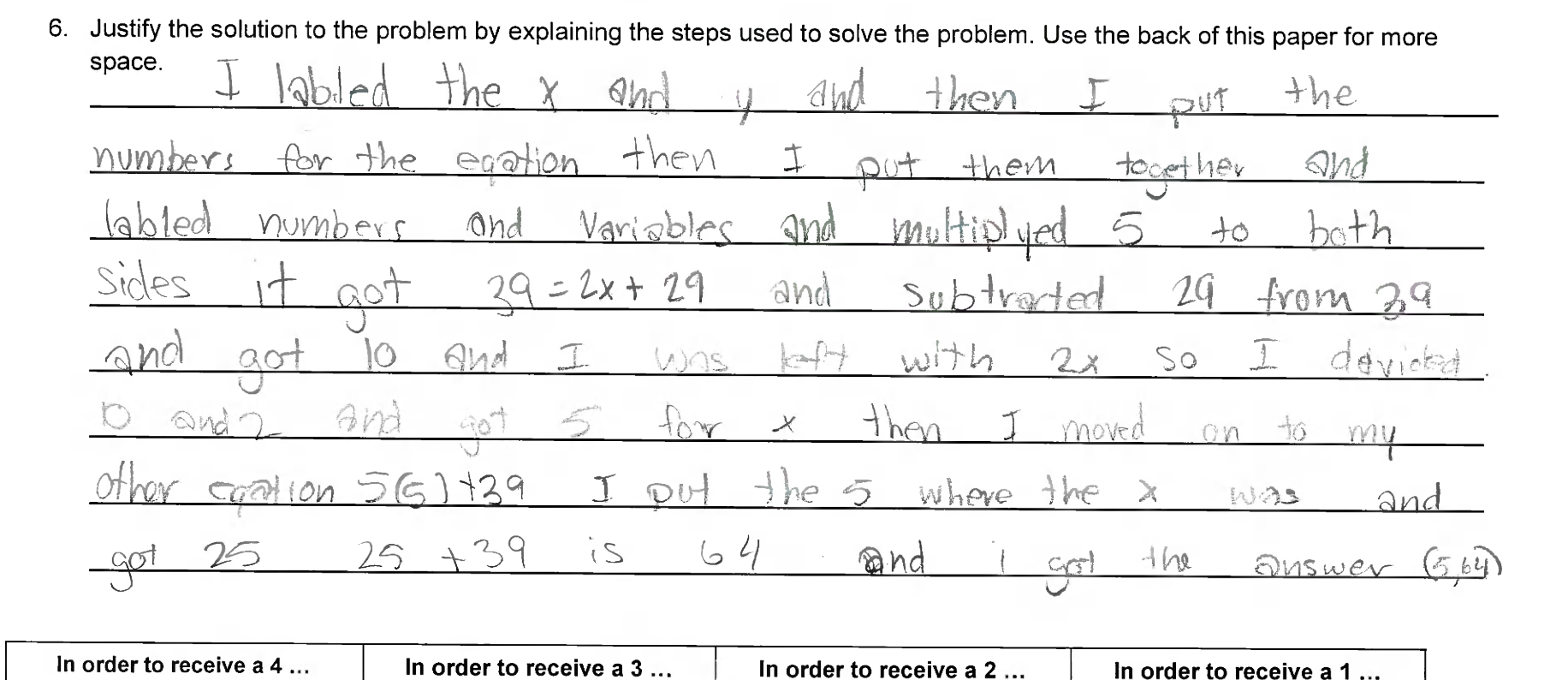
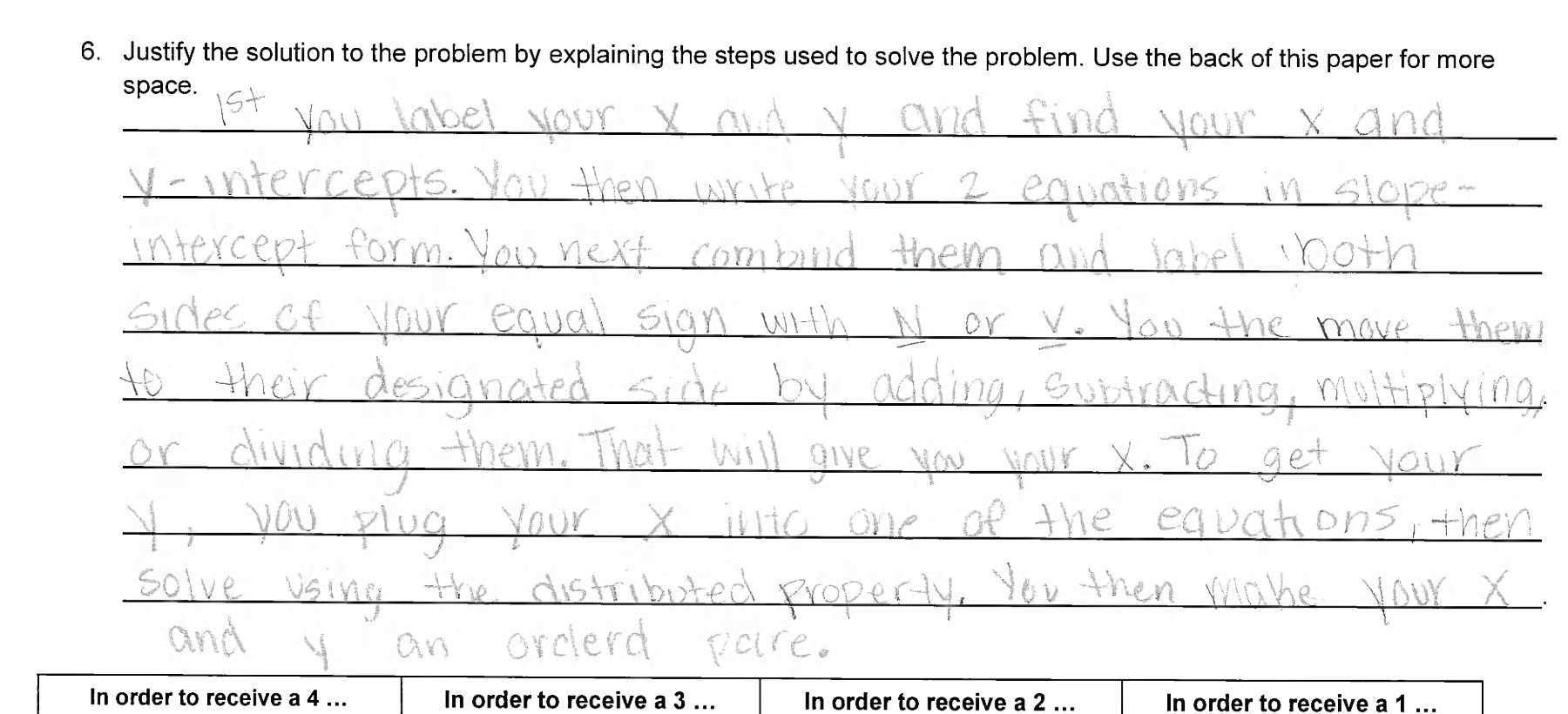
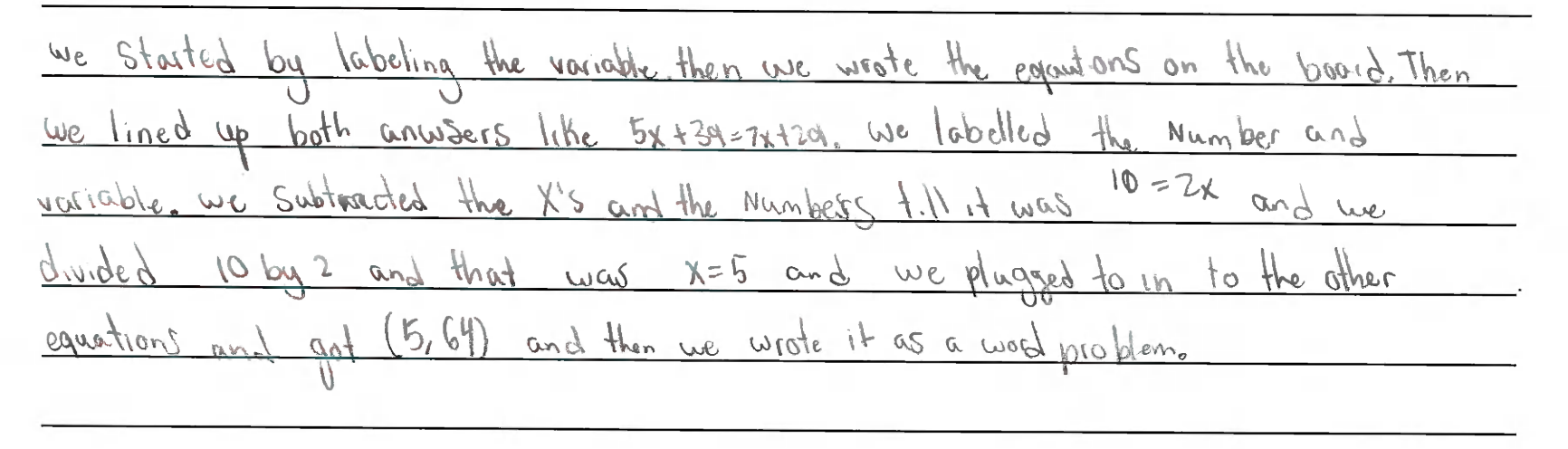
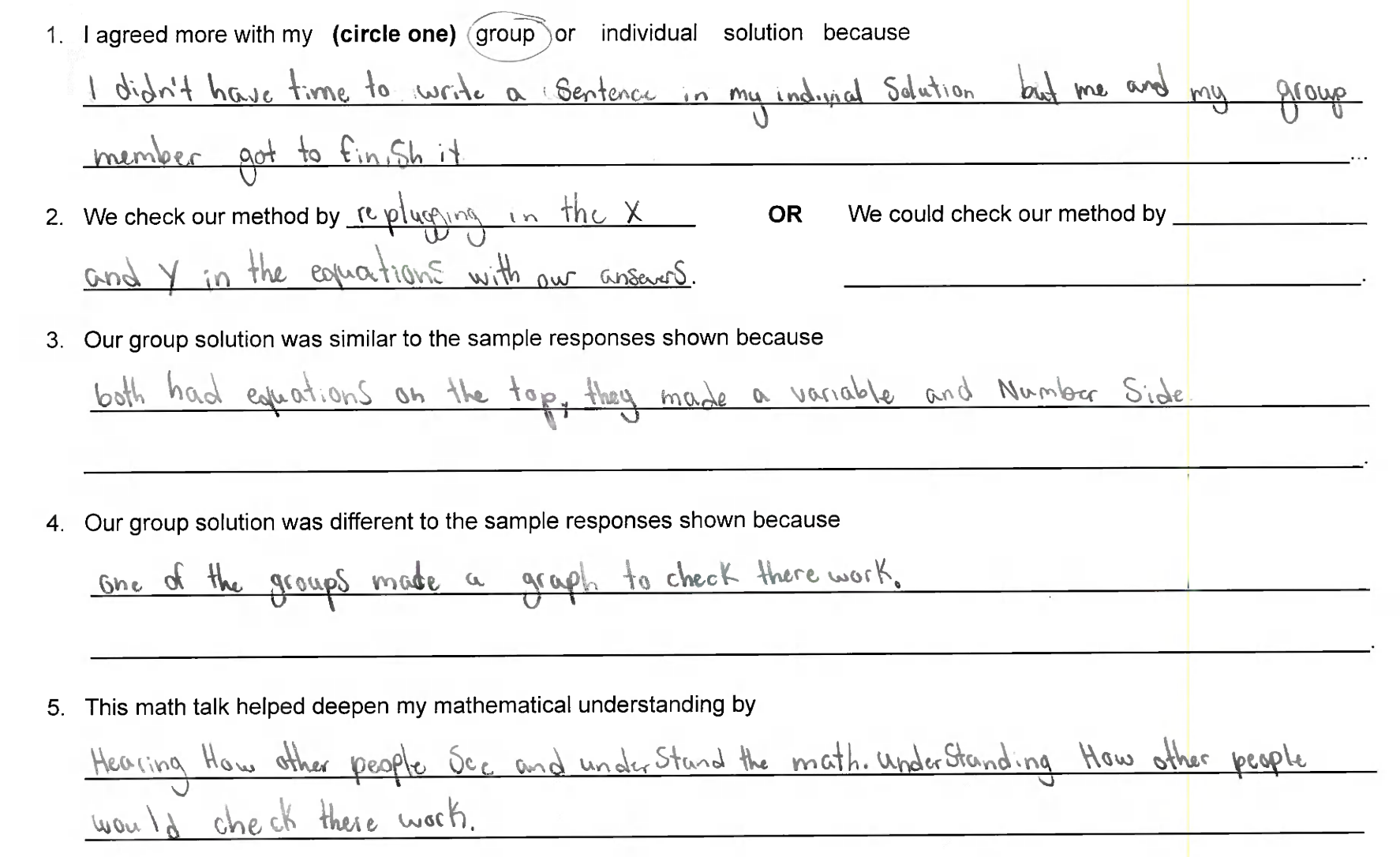
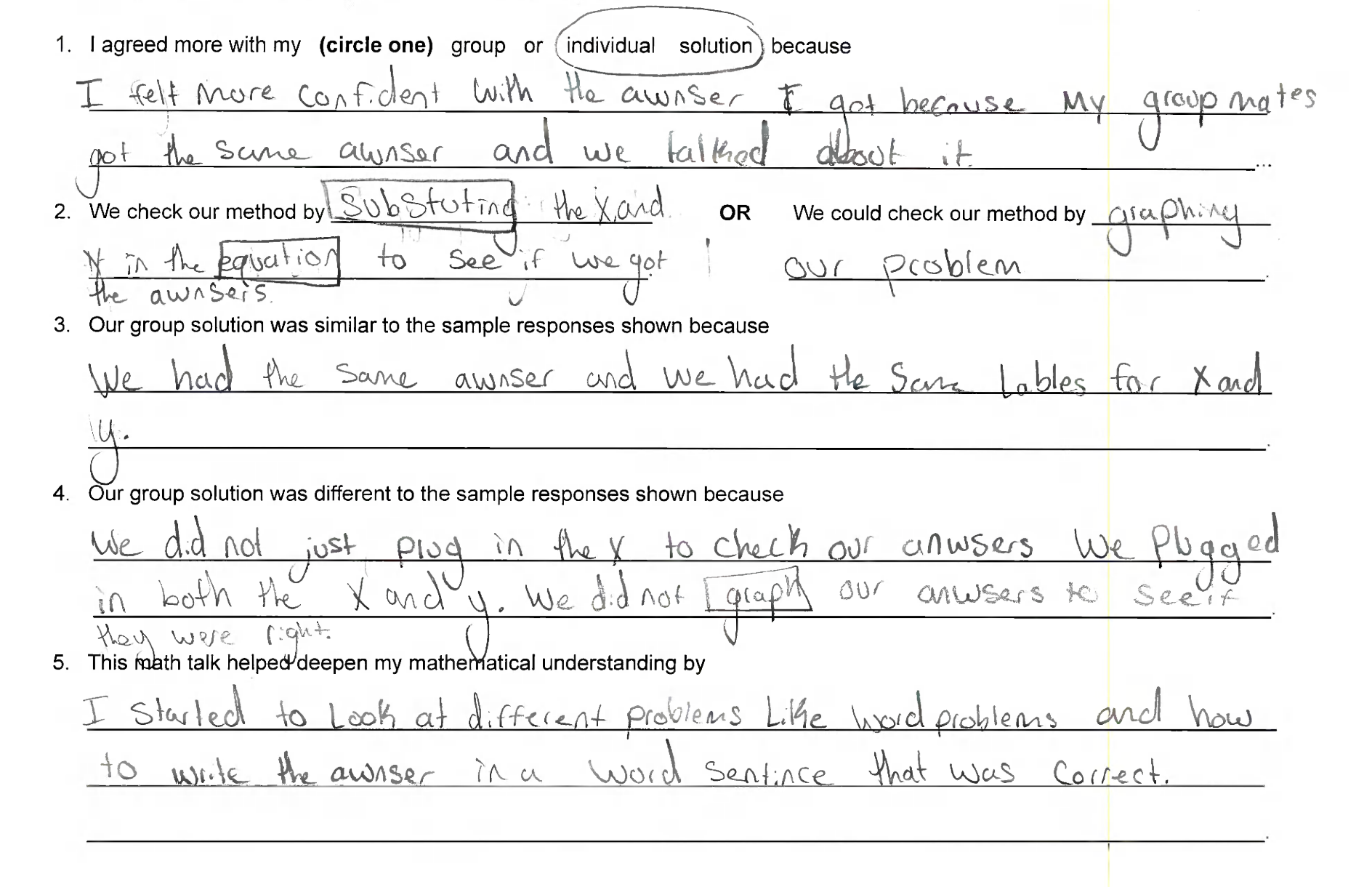
Students also write in other ways or show literacy in math through projects. They are currently working on a Pythagorean Theorem project where they have to find a real world right triangle and prove the Pythagorean Theorem using graphs, captions, and sentences. I adapted it from this lesson.
We have to remember in math, literacy may look different than in other courses. Teachers use mathematical models in multiple representations, including the use of symbols, numbers, graphs, and words to show literacy in mathematics. Problem scenarios are stated in words, and student written work involves all the forms above. Students have to be given opportunities to practice speaking and listening within the subject and have routines and rubrics for how to do that. In future posts, I’ll go into lessons I use to develop vocabulary with literacy, like hexagonal thinking, and how I create opportunities for discourse through Building Thinking Classrooms.
How do you use literacy in your own classroom? Comment or message me if you want to share! I’m always looking to learn new ways of using literacy in my own classroom!
 Teacher Station